
A technical dictionary of printmaking, André Béguin.
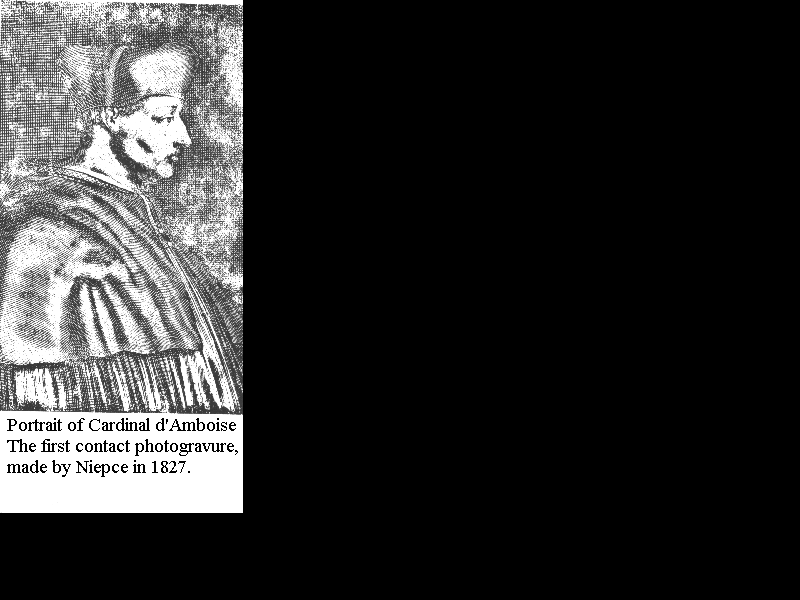 The first
contact photogravure was made by Niepce in 1827 and was a portrait of
Cardinal Amboise of which he made several impressions. Niepce used a
tin plate covered with
Syrian
asphalt* which has the property of
becoming white and insoluble when exposed to light. The plate thus
had to be prepared in darkness to then be exposed to light either
after being covered with a design whose blacks stopped the light or
then was exposed in a darkroom. The exposed parts of the plate then
became insoluble while the black parts were easily dissolved with
some gasoline. All that was then left to do was to bite the plate in
the same way used for etchings*. Thus contact photogravure was not
only one of the first photographic experiments, it was also the first
attempt at photochemical engraving
[*
photogravure].
The first
contact photogravure was made by Niepce in 1827 and was a portrait of
Cardinal Amboise of which he made several impressions. Niepce used a
tin plate covered with
Syrian
asphalt* which has the property of
becoming white and insoluble when exposed to light. The plate thus
had to be prepared in darkness to then be exposed to light either
after being covered with a design whose blacks stopped the light or
then was exposed in a darkroom. The exposed parts of the plate then
became insoluble while the black parts were easily dissolved with
some gasoline. All that was then left to do was to bite the plate in
the same way used for etchings*. Thus contact photogravure was not
only one of the first photographic experiments, it was also the first
attempt at photochemical engraving
[*
photogravure].